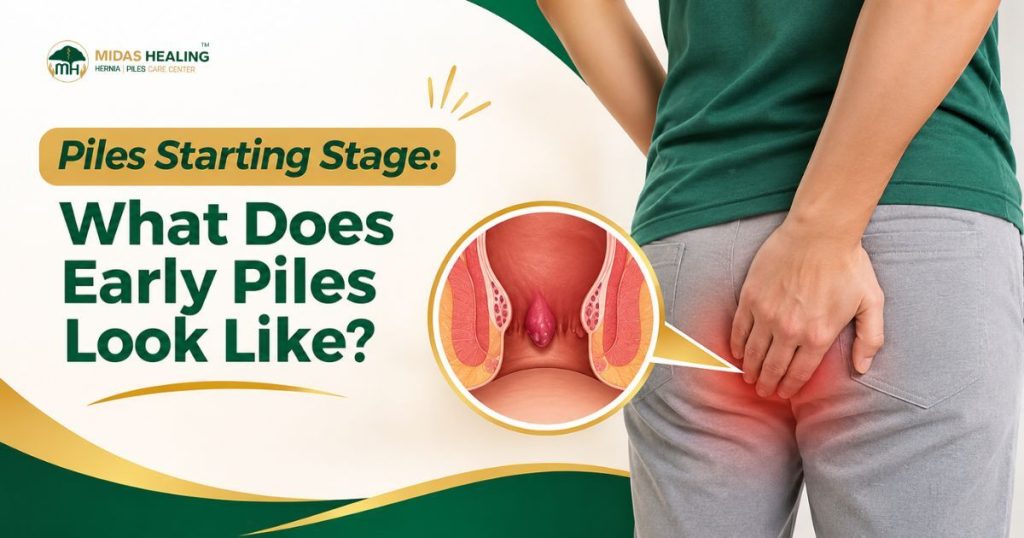
Piles, also called haemorrhoids, are swollen blood vessels in or around the anus and lower rectum. They can begin with mild symptoms that people often ignore or mistake for temporary irritation. Recognising the piles starting stage can help you seek medical advice before the discomfort begins affecting your daily routine.
But what do early piles actually look like? Here are the signs to watch for and the steps you can take.
What Does the Piles Starting Stage Look Like?
The piles starting stage does not always involve a visible lump or severe pain. Internal piles may develop inside the rectum and remain unnoticed at first. External piles form under the skin around the anus and may cause itching, swelling or tenderness.
Some common early signs include:
- Mild itching: You may notice irritation or an itchy feeling around the anus.
- Slight swelling: A small, soft lump may appear near the anal opening.
- Discomfort while passing stools: You may feel pressure or soreness, especially if you strain.
- Bright red bleeding: A small amount of fresh blood may appear on toilet paper or in the toilet after a bowel movement.
- Mucus discharge: Some people notice mucus after passing stools.
These symptoms can occur with haemorrhoids, but they do not confirm the condition. Other problems can cause similar signs, so a medical assessment is important.
Common Causes Behind Early Piles
Piles develop when increased pressure affects the blood vessels around the lower rectum and anus. Certain everyday habits can raise this pressure and contribute to the beginning stage piles.
Common risk factors include:
- Constipation and passing hard stools
- Straining during bowel movements
- Sitting on the toilet for too long
- Spending long hours sitting without movement
- Low fibre intake
- Pregnancy and ageing
Recognising these habits can help you make changes that support healthier bowel movements.
How to Manage the Beginning Stage of Piles
If you notice symptoms associated with the piles starting stage, avoid ignoring them or relying only on home remedies. Simple lifestyle changes may ease discomfort and reduce straining.
1. Increase Fibre in Your Diet
Include fruits, vegetables, whole grains and other fibre-rich foods in your meals. Fibre helps soften stools and makes bowel movements easier.
2. Drink Enough Water
Staying hydrated supports regular bowel movements. Combine adequate fluid intake with a balanced diet to help prevent constipation.
3. Avoid Straining
Do not force bowel movements or spend unnecessary time sitting on the toilet. Respond to the urge to pass stools rather than delaying it.
4. Stay Physically Active
Regular walking and gentle exercise can support digestion and help reduce constipation. Avoid remaining seated for long periods.
These steps may help manage mild symptoms, but they cannot replace a proper diagnosis or treatment when needed.
When Should You See a Doctor?
Do not assume that every sign of early piles is harmless. Rectal bleeding can also occur due to other digestive or bowel conditions. Arrange a medical consultation if you notice bleeding, recurring lumps, persistent discomfort or symptoms that are getting worse.
Seek urgent medical attention if you experience heavy or continuous bleeding, large blood clots or severe pain. A doctor can examine the area, identify the cause and recommend suitable treatment.
Conclusion
The piles starting stage may involve itching, mild swelling, discomfort or bleeding after bowel movements. Paying attention to these changes and addressing constipation early can help you manage symptoms. For proper assessment and guidance, consult the specialists at Midas Healing rather than delaying care or self-diagnosing.
📋 In This Article
- What Does the Piles Starting Stage Look Like?
- Common Causes Behind Early Piles
- How to Manage the Beginning Stage of Piles
- When Should You See a Doctor?
- Conclusion
- Frequently Asked Questions
Get Expert Consultation – Only ₹399
Get Expert Consultation – Only ₹399
Phone
+91 7070700684
+91 7070700683
midashealing1@gmail.com
Frequently Asked Questions
1. Can piles start without pain?
Yes. Internal piles may not cause pain, especially in their early stages. Some people first notice bright red bleeding after passing stools or a feeling of incomplete bowel emptying. A medical assessment can help confirm the cause.
2. How can I identify early piles at home?
You may notice itching, mild swelling, discomfort or a small lump around the anus. These signs can suggest early piles, but they cannot confirm the diagnosis. Consult a doctor, particularly if you notice rectal bleeding.
3. Can the beginning stage of piles go away?
Mild piles may improve with dietary changes, adequate fluids and less straining during bowel movements. However, symptoms can return. If discomfort or bleeding continues, seek medical advice instead of relying on home care alone.
4. Is bleeding normal during the piles starting stage?
Bright red bleeding can occur with haemorrhoids, but it should never be automatically dismissed as piles. Other conditions can cause rectal bleeding. Arrange a medical assessment to establish the cause and receive appropriate advice.
5. What foods should I eat if I have early piles?
Choose fibre-rich foods such as fruits, vegetables, oats and whole grains. Drink enough water and avoid habits that contribute to constipation. These changes may make stools easier to pass and reduce straining.