MIDAS Healing Center
Updated September 2026 · Pune
Piles can make everyday activities uncomfortable, especially when bleeding, pain or prolapse keeps returning. If medication and lifestyle changes are no longer enough, surgery may become an option. At this stage, many patients compare laser piles treatment vs traditional surgery and wonder which approach is right for them.
The answer depends on the severity and grade of the haemorrhoids, your symptoms and your overall health. A specialist assessment is important before choosing any procedure. Midas Healing focuses on proctology care and offers minimally invasive treatment options for suitable patients.
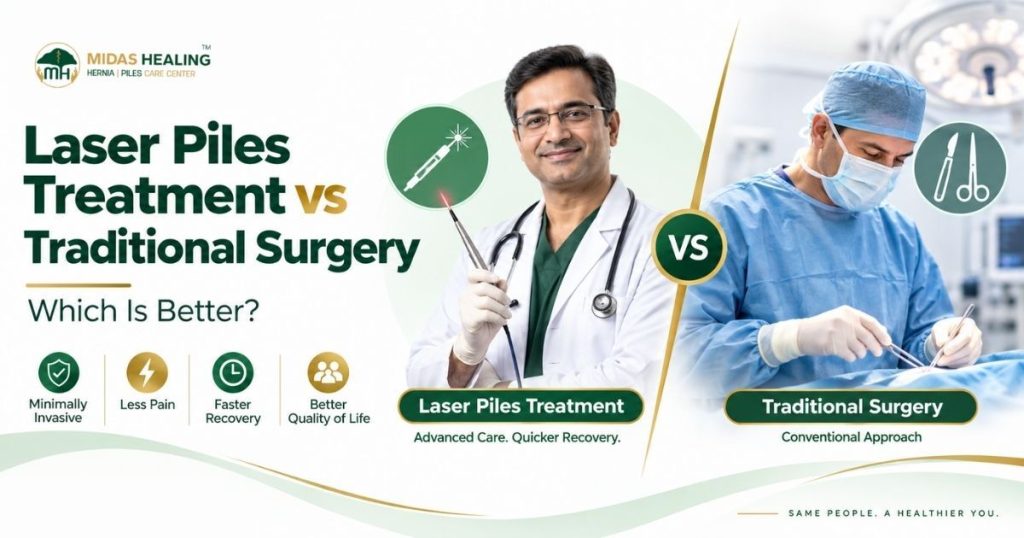
Laser Piles Treatment vs Traditional Surgery: Understanding the Difference
Traditional surgery generally involves removing or treating haemorrhoidal tissue through conventional surgical techniques. It can be effective for advanced cases, but recovery may involve more discomfort and a longer healing period.
Laser procedures use focused energy to treat the affected tissue while aiming to minimise trauma to surrounding areas. Midas Healing describes its laser approach as minimally invasive, with potential benefits including reduced bleeding, less post-procedure discomfort and faster recovery.
So, when comparing laser piles treatment vs traditional surgery, the key difference is not simply the technology. Your doctor must decide which procedure matches your condition.
Benefits of Laser Piles Surgery
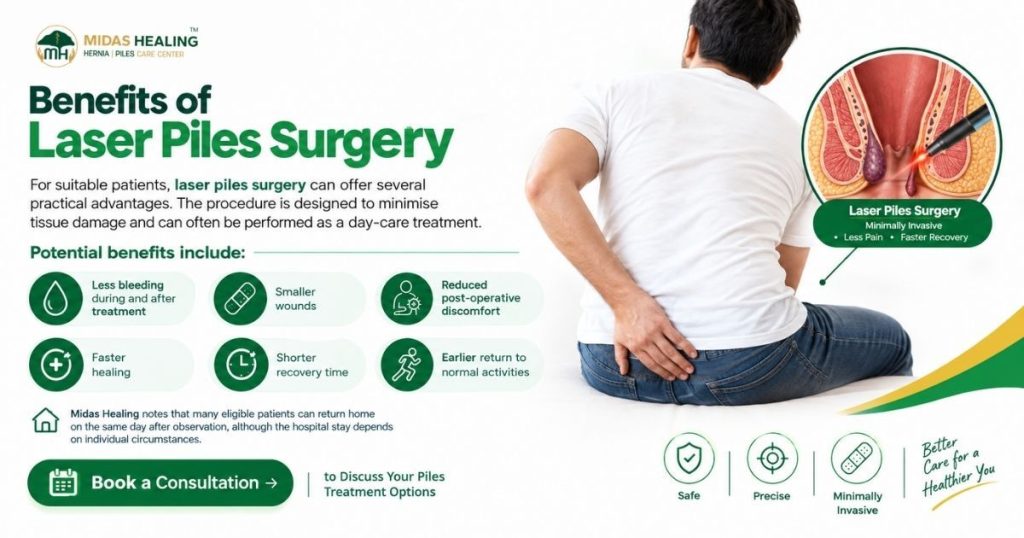
For suitable patients, laser piles surgery can offer several practical advantages. The procedure is designed to minimise tissue damage and can often be performed as a day-care treatment.
Potential benefits include:
- Less bleeding during and after treatment
- Smaller wounds
- Reduced post-operative discomfort
- Faster healing
- Shorter recovery time
- Earlier return to normal activities
Midas Healing notes that many eligible patients can return home on the same day after observation, although the hospital stay depends on individual circumstances.
Book a Consultation to Discuss Your Piles Treatment Options
When Can Traditional Surgery Still Be Considered?
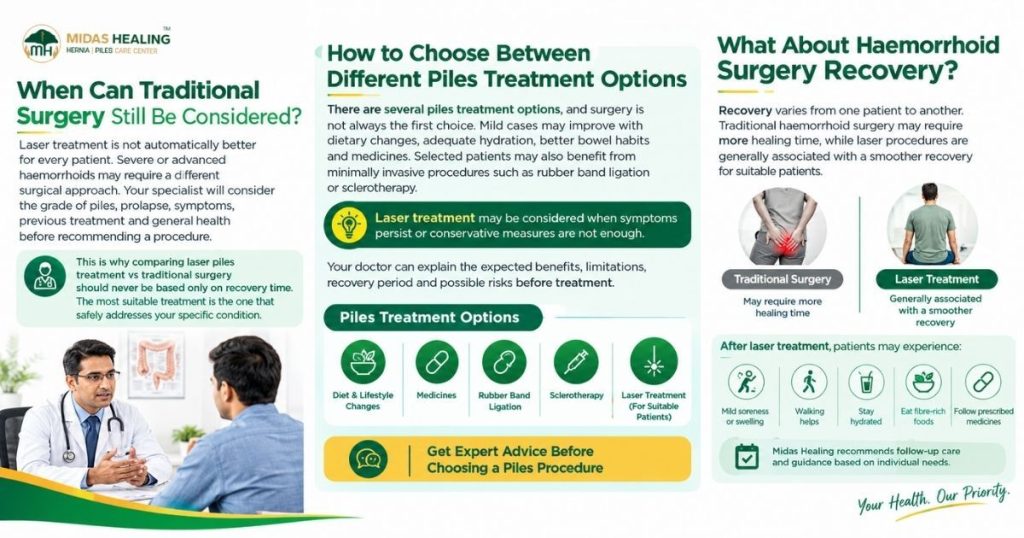
Laser treatment is not automatically better for every patient. Severe or advanced haemorrhoids may require a different surgical approach. Your specialist will consider the grade of piles, prolapse, symptoms, previous treatment and general health before recommending a procedure.
This is why comparing laser piles treatment vs traditional surgery should never be based only on recovery time. The most suitable treatment is the one that safely addresses your specific condition.
How to Choose Between Different Piles Treatment Options
There are several piles treatment options, and surgery is not always the first choice. Mild cases may improve with dietary changes, adequate hydration, better bowel habits and medicines. Selected patients may also benefit from minimally invasive procedures such as rubber band ligation or sclerotherapy.
Laser treatment may be considered when symptoms persist or conservative measures are not enough. Your doctor can explain the expected benefits, limitations, recovery period and possible risks before treatment.
Get Expert Advice Before Choosing a Piles Procedure
What About Haemorrhoid Surgery Recovery?
Recovery varies from one patient to another. Traditional haemorrhoid surgery may require more healing time, while laser procedures are generally associated with a smoother recovery for suitable patients.
After laser treatment, patients may experience mild soreness or swelling. Walking, staying hydrated, eating fibre-rich foods and following prescribed medicines can support recovery. Midas Healing recommends follow-up care and guidance based on individual needs.
Conclusion
When comparing laser piles treatment vs traditional surgery, there is no single answer that suits everyone. Laser treatment may provide less discomfort, minimal bleeding and quicker recovery for suitable cases, while conventional haemorrhoid surgery may remain appropriate for some advanced conditions. Midas Healing by Dr Chetan Mhaske can assess your symptoms and help you choose the most suitable treatment approach.
📋 In This Article
- Laser Piles Treatment vs Traditional Surgery: Understanding the Difference
- Laser Piles Treatment vs Traditional Surgery: Understanding the Difference
- Benefits of Laser Piles Surgery
- When Can Traditional Surgery Still Be Considered?
- How to Choose Between Different Piles Treatment Options
Get Expert Consultation – Only ₹399
Error: Contact form not found.
Get Expert Consultation – Only ₹399
Phone
+91 7070700684
+91 7070700683
midashealing1@gmail.com
Frequently Asked Questions
1. Is laser piles surgery better than traditional surgery?
For suitable patients, laser piles surgery may offer benefits such as less bleeding, reduced discomfort and quicker recovery. However, it is not suitable for every case. A specialist must assess the severity and grade of haemorrhoids before recommending the appropriate procedure.
2. What are the main piles treatment options?
Piles treatment options include dietary and lifestyle changes, medicines, minimally invasive procedures and surgery. The right choice depends on symptom severity and the type of haemorrhoids. A specialist assessment helps determine whether conservative care or a procedure is necessary.
3. Is haemorrhoid surgery painful?
The level of discomfort varies depending on the procedure and individual recovery. Laser treatment is designed to minimise tissue trauma and may cause less post-operative discomfort than conventional techniques. Your doctor can explain expected pain, medicines and recovery before treatment.
4. How long does recovery take after laser treatment?4. How long does recovery take after laser treatment?
Recovery differs between patients. Many people can resume light activities within a few days, while complete healing takes longer. Following medical advice, drinking enough water, eating fibre-rich foods and avoiding unnecessary strain can support a smoother recovery after treatment.
5. How do I know which piles treatment is right for me?
The best treatment depends on your symptoms, haemorrhoid grade, medical history and response to earlier treatment. Laser treatment may suit some patients, while others may need conventional surgery or non-surgical care. A specialist consultation is essential before making a decision.