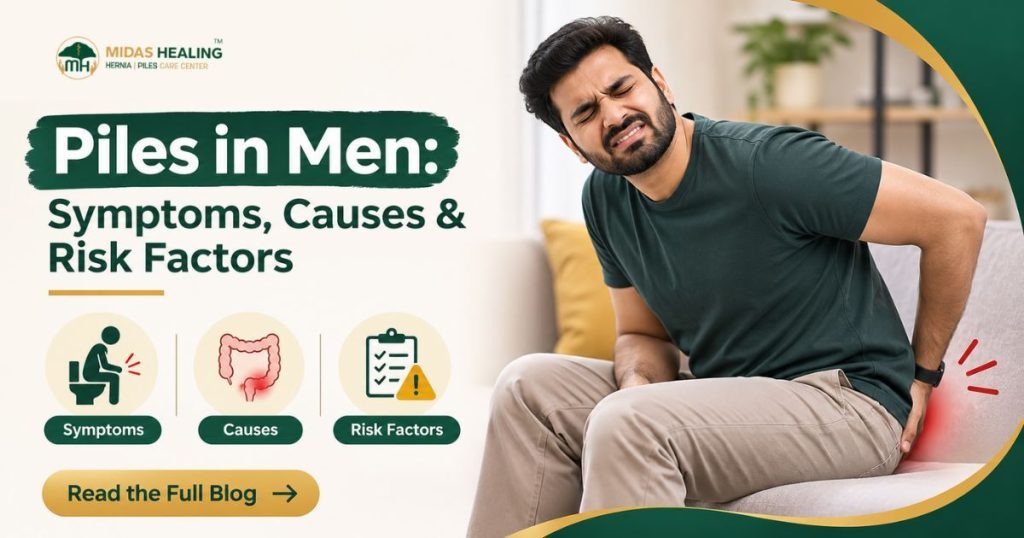
You spot a streak of bright red blood after using the toilet. Or there’s an itch that won’t settle. Many men shrug it off and hope it goes away.
Often, the cause is piles in men, a very common and usually treatable problem. This guide explains the signs, what causes them and when it’s time to get checked.
What Are the Most Common Signs of Piles in Men?
The most common signs are bright red blood after passing stool, itching or soreness around the anus and a soft lump near the opening. Piles are rarely serious, but any rectal bleeding should be checked by a doctor to rule out other causes.
What Are Hemorrhoids in Men?
Piles, also called haemorrhoids, are swollen blood vessels in or around the anus and lower rectum. Everyone naturally has these vessels. They only become a problem when they swell and cause symptoms.
There are two main types:
- Internal piles form inside the lower rectum. They’re usually painless but may bleed.
- External piles form under the skin around the anus. They can itch, swell and hurt, especially if a clot forms.
Hemorrhoids in men are common. According to the US National Institute of Diabetes and Digestive and Kidney Diseases, piles affect both men and women, about 1 in 20 Americans, and around half of adults over 50
Piles Symptoms in Men to Watch For
Piles symptoms in men can vary with the type and size of the swelling. Look out for:
- Bright red blood on toilet paper, in the bowl or on the stool
- Itching or irritation around the anus
- A lump near the anus that may need pushing back in
- Pain or soreness, especially when sitting
- Mucus discharge after a bowel movement
- Feeling you still need to go after using the toilet
Some men have piles without noticing any symptoms.
What Causes Piles?
Piles develop when pressure builds up in the veins of the lower rectum. Doctors aren’t certain of one exact cause, but common triggers include:
- Straining during bowel movements
- Chronic constipation or diarrhoea
- A low-fibre diet
- Sitting on the toilet for long periods, often while scrolling on a phone
Risk Factors That Raise the Chance of Piles in Men
Some daily habits and life stages make piles in men more likely:
- Heavy lifting: Regular gym lifting or manual work can raise pressure in the abdomen and rectum
- Age over 50: Supporting tissues weaken with time
- Poor diet and low fluid intake: Both lead to harder stools and more straining
- Delaying the toilet: Holding on can make stools harder to pass
Adding fibre, drinking more water and not straining can lower your risk.
📋 In This Article
- What Are the Most Common Signs of Piles in Men?
- What Are Hemorrhoids in Men?
- Piles Symptoms in Men to Watch For
- What Causes Piles?
- Risk Factors That Raise the Chance of Piles in Men
- When Should Men See a Doctor?
- Don't Let Embarrassment Delay Your Relief
- Frequently Asked Questions
Get Expert Consultation – Only ₹399
Error: Contact form not found.
Get Expert Consultation – Only ₹399
Phone
+91 7070700684
+91 7070700683
midashealing1@gmail.com
When Should Men See a Doctor?
Many men delay seeing a doctor out of embarrassment. But doctors treat piles every day.
See a doctor if:
- You notice any bleeding from your bottom
- Symptoms don’t improve after seven days of home care
- Piles keep coming back
Get urgent medical help for heavy bleeding, large clots or severe pain. Bleeding can also come from other conditions, such as anal fissures or bowel cancer, so a proper check matters. Piles symptoms in men deserve attention, not guesswork.
Don't Let Embarrassment Delay Your Relief
Piles are common, and most cases settle with simple changes or treatment. The key is not to ignore the signs or self-diagnose bleeding.
If you’re dealing with piles, early advice can save you weeks of discomfort.
At Midas Healing, our specialists assess piles symptoms carefully and explain every treatment option clearly. Learn more about piles treatment in Pune and book a consultation when you’re ready.
Frequently Asked Questions
1. Are piles more common in men than women?
No. Piles affect men and women alike. Hemorrhoids in men may go unreported because many delay seeing a doctor. Pregnancy raises the risk in women, while heavy lifting and straining are common triggers for men. Both benefit from early advice.
2. Can weightlifting cause piles?
Regularly lifting heavy weights can raise pressure in the abdomen and rectum, which may contribute to piles. Breathing out during the lift, avoiding breath-holding and not straining can all help. See a doctor if any bleeding or pain appears afterwards.
3. Do piles go away on their own?
Many mild cases improve on their own within a few days with more fibre, fluids and less straining. If symptoms last longer than a week, keep coming back or include bleeding, see a doctor for a proper assessment and treatment.
4. Is bleeding from piles dangerous?
Bleeding from piles is usually bright red and not dangerous in itself. However, bleeding can also signal other conditions. Never assume piles symptoms in men explain every bleed. A doctor’s examination is always the safest way to know the cause.
5. How can men prevent piles?
Eat plenty of fibre, drink enough water and avoid straining on the toilet. Don’t sit there for too long. Staying physically active helps too. These simple habits reduce the risk of piles in men and help prevent painful flare-ups later.