Spotting a little blood on the toilet paper can be worrying. In many cases, it’s a sign of piles in their mildest form. The good news is that the first stage of piles usually responds well to simple changes, as long as you act early and don’t ignore it.
What Is the First Stage of Piles?
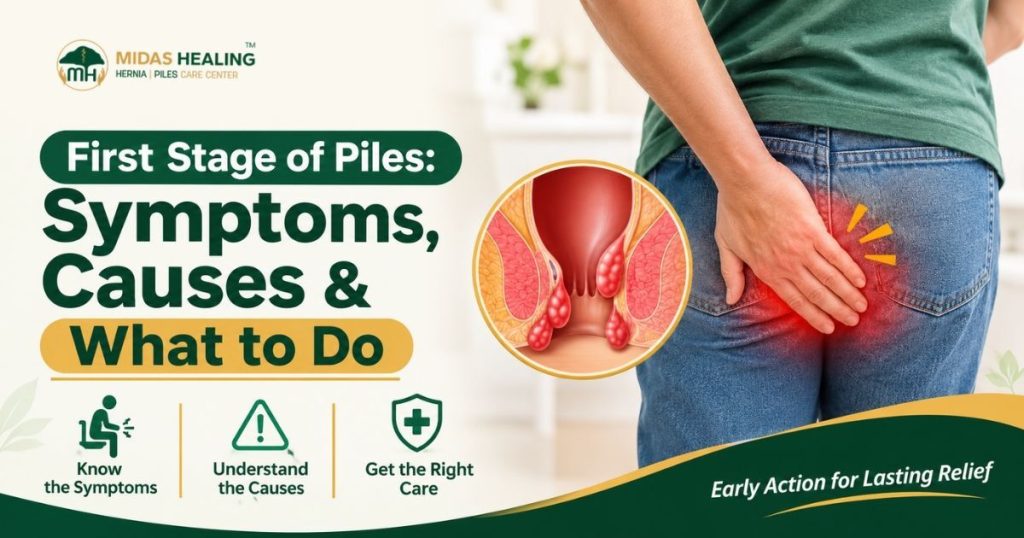
Piles, or haemorrhoids, are swollen blood vessels in and around the back passage. Internal piles form inside the rectum, and doctors grade them by how far they slip down.
How Doctors Grade Piles
- Grade 1: Swollen veins stay inside the rectum and don’t bulge out
- Grade 2: They push out when you pass stools, then go back on their own
- Grade 3: They come out and need pushing back by hand
- Grade 4: They stay outside and can’t be pushed back
Grade 1 piles sit at the very start of this scale. You can’t see or feel a lump, which is why many people miss them.
Grade 1 Piles Symptoms to Watch For
Most people notice bleeding before anything else. Look out for:
- Bright red blood on the toilet paper or in the pan
- Mild itching around the anus
- A feeling that your bowel hasn’t fully emptied
- Slight discomfort after passing stools
Pain is rare at this stage, since internal piles sit above the area with pain-sensing nerves
What Causes Early Piles?
Anything that puts pressure on the veins in your lower rectum can trigger early piles. Common causes include:
- Constipation and straining on the toilet
- A diet low in fibre
- Sitting for long hours, especially at a desk or while driving
- Pregnancy
- Heavy lifting
- Carrying extra weight
What to Do in the First Stage of Piles
You can often settle the first stage of piles at home with a few steady habits.
Change What You Eat and Drink
Fibre softens stools so they pass without straining. Add whole grains, dal, fruit, leafy vegetables and seeds to your meals. Drink plenty of water, as fibre works best with enough fluid.
Try a Warm Sitz Bath
Sit in a few inches of warm water for 10 to 15 minutes, two or three times a day. It eases itching and is one of the simplest ways to calm grade 1 piles.
Fix Your Toilet Habits
Go as soon as you feel the urge. Don’t sit on the toilet scrolling your phone, as long sittings add pressure. Resting your feet on a small stool puts your body in a better position to pass stools.
Seek urgent medical attention if you experience heavy or continuous bleeding, large blood clots or severe pain. A doctor can examine the area, identify the cause and recommend suitable treatment.
Could It Be Something Else?
Bleeding from the back passage isn’t always piles. An anal fissure, a small tear in the skin, often causes sharp pain and bleeding. A fistula may cause swelling and discharge. Some bowel conditions also cause bleeding, so it’s worth getting checked rather than guessing.
When to See a Specialist About Early Piles
Book an appointment if bleeding keeps coming back, lasts more than a week, or you notice a change in your bowel habits. Seek urgent care for heavy bleeding, dark or tarry stools, or dizziness.
If home care doesn’t help, a specialist may suggest a minor procedure. Treating early piles at this point is usually quicker and simpler than waiting until they reach a later grade.
Conclusion
The first stage of piles is the easiest to manage. Better eating, warm soaks and good toilet habits often bring quick relief. If symptoms hang around, get them checked. At MIDAS Healing Center in Hadapsar, Pune, our specialists can confirm what’s going on and guide you towards the right care, whether that’s home treatment or a minimally invasive option.
📋 In This Article
- What Is the First Stage of Piles?
- Grade 1 Piles Symptoms to Watch For
- What Causes Early Piles?
- What to Do in the First Stage of Piles
- When to See a Specialist About Early Piles
- Conclusion
- Frequently Asked Questions
Get Expert Consultation – Only ₹399
Get Expert Consultation – Only ₹399
Phone
+91 7070700684
+91 7070700683
midashealing1@gmail.com
Frequently Asked Questions
1. Can the first stage of piles go away on its own?
Often, yes. With more fibre, plenty of water and no straining, the first stage of piles can settle within a few days or weeks. If bleeding carries on or keeps returning, see a doctor rather than waiting it out
2. Are grade 1 piles painful?
Usually not. Grade 1 piles form above the nerve endings that sense pain, so most people only notice bleeding or mild itching. Sharp pain while passing stools may point to a fissure instead, which needs a proper check-up.
3. Which foods should I avoid with piles?
Cut back on refined flour, fried snacks, processed foods and too much spicy food, as these can lead to hard stools. Limit tea, coffee and alcohol too, since they can dry you out and make your constipation even worse.
4. Can early piles turn into a more serious grade?
They can, especially if constipation and straining continue. Treating early piles with simple diet changes and better habits lowers the chance of them slipping further down. Regular check-ups help you catch any change before it becomes harder to treat.
5. Is bleeding from piles a sign of cancer?
Bright red bleeding is most often linked to piles or a fissure. Still, bowel cancer can cause similar signs, especially with weight loss, tiredness or changing bowel habits. A doctor’s examination is the only way to rule it out.