MIDAS Healing Center
Updated Sept 2026 · Pune
A hernia develops when an internal organ or tissue pushes through a weak spot in the surrounding muscle or connective tissue. It can appear anywhere, though groin and abdominal hernias are among the most frequently seen types. Knowing the causes of hernia helps you spot possible risks early and seek advice when something does not feel right.
What Are the Main Causes of Hernia?
Most causes of hernia come down to two things: muscle weakness and pressure inside the abdomen. The weakness may be there from birth, or it can build up slowly over time because of ageing, a past surgery, or repeated strain.
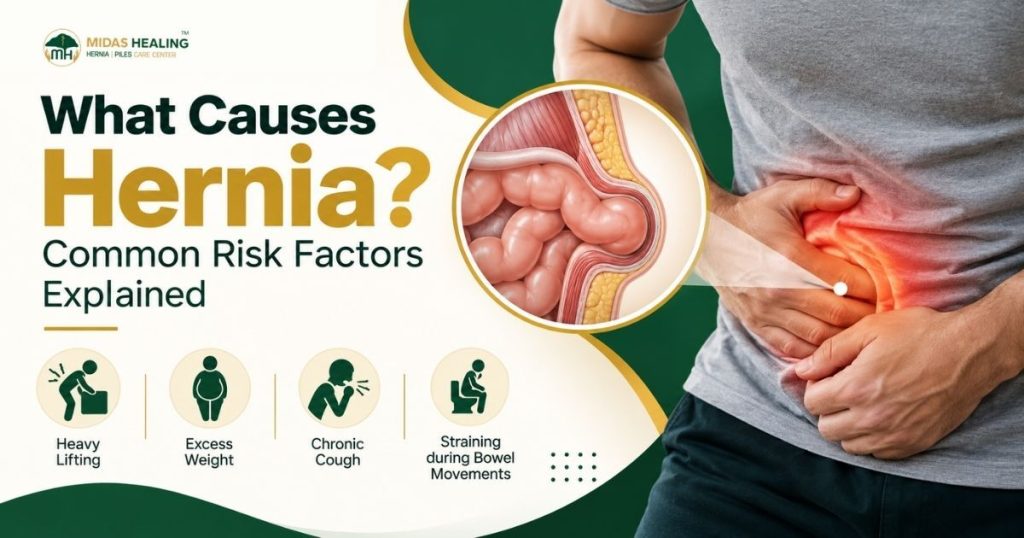
Common hernia causes include lifting heavy objects, a cough that does not go away, constipation, and any activity that pushes abdominal pressure up repeatedly. Still, having a risk factor does not guarantee that a hernia will actually develop.
Abdominal Hernia Causes Linked to Muscle Weakness
One key abdominal hernia causes is a weakening of the abdominal wall itself. This can happen naturally with age, or after an injury and surgical procedure.
An incisional hernia, for instance, can form around an old surgical scar if the wall does not fully regain its strength. These hernia causes can show up months or even years after the original surgery.
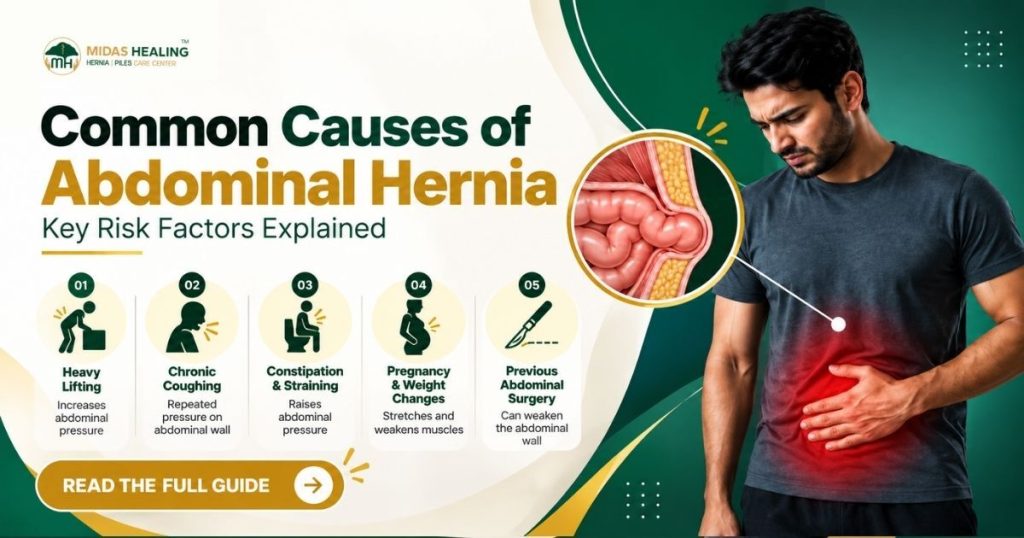
1. Heavy Lifting and Physical Strain
Lifting heavy things repeatedly pushes the pressure inside the abdomen up. If the wall already has a weak point, that extra pressure can play a role in forming a hernia.
People whose work involves frequent lifting or hard physical effort should use proper lifting techniques. A sudden, uncontrolled strain can also spike the pressure, especially when someone lifts something heavy without the right support.
2. Chronic Coughing
A cough that lingers is another contributor among the causes of hernia. Every coughing episode raises the pressure inside the abdomen and can stress an already weakened area.
Conditions that lead to long-lasting coughing should be checked and treated instead of being ignored.
3. Constipation and Straining
Pushing hard during bowel movements raises abdominal pressure. Over time, chronic constipation can feed into some hernia causes, particularly when someone regularly strains to pass stool.
Getting enough fiber, drinking water throughout the day, and staying active can support healthier bowel habits and cut down on unnecessary straining.
4. Pregnancy and Weight Changes
Pregnancy stretches the abdominal wall and increases the pressure inside, which can lead to certain hernias. Gaining a significant amount of weight does something similar.
These are well-known hernia risk factors, though they do not mean a hernia is inevitable.
5. Previous Abdominal Surgery
Surgery leaves a weaker area in the abdominal wall behind. That is why surgical history is one of the important abdominal hernia causes doctors look at when they see a new lump or bulge.
Hernia Risk Factors You Should Know
Several hernia risk factors can overlap. Ageing, obesity, pregnancy, chronic coughing, constipation, repeated heavy lifting, and previous abdominal surgery can all raise the chance of developing a hernia.
Family history matters for some people too. Certain individuals naturally have weaker connective tissue, which makes them more prone.
When Should You See a Doctor?
A new lump or swelling, especially one that gets more obvious when coughing, standing, or straining, should be checked by a doctor. Pain, tenderness, vomiting, a bulge that keeps growing, or one that will not push back in all need prompt attention.
The right treatment depends on the type, location, and how serious it is. MIDAS Healing focuses on hernia care and offers both laparoscopic and open hernia repair under specialist surgical guidance.
Conclusion
Understanding the causes of hernia helps you recognise potential risks, though prevention is not always possible. Muscle weakness, repeated abdominal pressure, pregnancy, chronic coughing, constipation, and previous surgery can all play a part. MIDAS Healing by Dr Chetan Mhaske provides specialised hernia care with a focus on minimally invasive surgical approaches and personalised treatment plans.
📋 In This Article
- What Are the Main Causes of Hernia?
- Abdominal Hernia Causes Linked to Muscle Weakness
- Hernia Risk Factors You Should Know
- When Should You See a Doctor?
- Conclusion
Get Expert Consultation – Only ₹399
Error: Contact form not found.
Get Expert Consultation – Only ₹399
Phone
+91 7070700684
+91 7070700683
midashealing1@gmail.com
Frequently Asked Questions
1. What are the most common causes of hernia?
The usual causes of hernia include muscle weakness, heavy lifting, repeated straining, chronic coughing, constipation, pregnancy, and previous abdominal surgery. Several factors can overlap, so a doctor should assess any new swelling, pain, or unusual bulge in the abdomen.
2. Can heavy lifting cause a hernia?
Heavy lifting can add to hernia caused by raising the pressure inside the abdomen. The risk tends to be higher when an existing weak spot is already present. Using safe lifting techniques and avoiding sudden, excessive strain can help lower unnecessary abdominal pressure..
3. What are the main abdominal hernia causes?
Common abdominal hernia causes include weakness in the abdominal wall, previous surgery, persistent coughing, constipation with repeated straining, and increased abdominal pressure. Pregnancy and significant weight changes can also contribute. A physical examination helps identify the type and location.
4. Who is more likely to develop a hernia?
People with multiple hernia risk factors such as older age, obesity, pregnancy, chronic cough, constipation, previous abdominal surgery, or regular heavy lifting may face a higher chance. That said, hernias can also appear in people with no obvious risk factors at all.
5. Can hernias be prevented completely?
Not every hernia can be prevented, since some muscle weaknesses are present from birth or develop with age. Keeping a healthy weight, treating a persistent cough or constipation, using safe lifting methods, and avoiding unnecessary strain may help reduce certain risks though.