MIDAS Healing Center
Updated Aug 2026 · Pune
Piles, or haemorrhoids as they’re medically known, are swollen blood vessels around the anus or lower rectum. They’re common, and they tend to bring itching, discomfort, swelling, or bleeding. Mild cases can settle with simple measures, but symptoms that stick around shouldn’t just be waited out. Untreated piles can grow more uncomfortable over time and, in some cases, lead to complications that genuinely need medical attention.
Do Untreated Piles Get Worse the Longer You Wait?
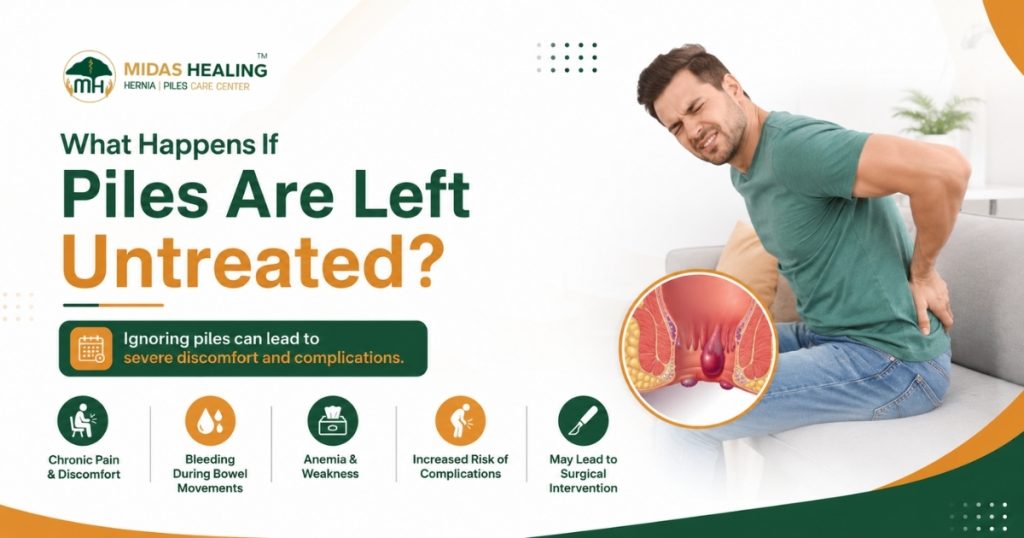
Often, yes. Haemorrhoids that go without proper care tend not to improve on their own. Untreated piles can become more painful, bleed repeatedly, or lead to complications like thrombosis or prolapse. Getting checked early helps pin down what’s actually causing the symptoms and what treatment fits, before things get harder to manage.
Don't Brush Off Persistent Bleeding
Rectal bleeding is probably the symptom most people associate with haemorrhoids, especially the internal kind. But it’s worth knowing that bleeding isn’t automatically down to piles. Anal fissures, inflammatory bowel disease, and colorectal issues can all produce similar bleeding.
If it keeps happening, comes on heavy, or shows up alongside other worrying signs, get it looked at. A clinician can work out whether haemorrhoids are actually the cause or something else entirely.
Prolapsed Haemorrhoids Tend to Get Harder to Ignore
Internal haemorrhoids sometimes prolapse, meaning they push outside the anus during a bowel movement. In milder cases, they slip back in on their own or with a gentle nudge. More advanced prolapse can stay outside, bringing irritation, mucus discharge, and real difficulty keeping things clean.
As this progresses, ordinary things like sitting, walking, or using the toilet start becoming genuinely uncomfortable, which is exactly how untreated piles turn into a daily nuisance. Prolapse that persists needs a proper look from a medical professional.
What Are the Complications of Piles?
The complications of piles shift depending on the type and how advanced things have got. Persistent prolapse brings irritation and hygiene struggles, while thrombosis can mean serious pain. Heavy or repeated bleeding can, in rare cases, contribute to iron-deficiency anaemia too.
There’s also the risk of a missed diagnosis. Assuming every bit of rectal bleeding comes from piles can let something else slip through unnoticed. That’s exactly why getting proper medical advice matters when symptoms won’t settle, feel unusual, or seem to be getting worse.
When Should Piles Actually See a Doctor?
Worth getting checked when bleeding keeps coming back, pain turns severe, a lump won’t go away, symptoms start interfering with daily life, or nothing you try at home helps. Sudden heavy bleeding, dizziness, fainting, or feeling unusually weak needs urgent medical attention, no waiting around.
How bad symptoms feel doesn’t always match the seriousness of the underlying cause, part of why untreated piles can sometimes surprise people. A proper assessment tells haemorrhoids apart from other anorectal or gastrointestinal problems and works out whether conservative management or a procedure fits.
Don't Let Piles Take Over Everyday Life
Leaving symptoms unchecked lets advanced haemorrhoids become genuinely troublesome, especially once prolapse, bleeding, or thrombosis sets in. The risks of piles tied to putting off assessment make it worth speaking to someone when symptoms don’t settle or keep coming back.
If persistent piles symptoms sound familiar, Midas Healing can help you understand what’s going on and talk through appropriate treatment options with proper medical guidance.
📋 In This Article
- Do Untreated Piles Get Worse the Longer You Wait?
- Don't Brush Off Persistent Bleeding
- Prolapsed Haemorrhoids Tend to Get Harder to Ignore
- What Are the Complications of Piles?
- When Should Piles Actually See a Doctor?
Get Your FREE Expert Consultation
Error: Contact form not found.
Get Your FREE Expert Consultation
Phone
+91 7070700684
+91 7070700683
midashealing1@gmail.com
Frequently Asked Questions
1. What are the risks of leaving piles untreated?
Untreated piles can bring persistent bleeding, pain, itching, swelling, or prolapse, and some may develop thrombosis. Repeated heavy bleeding can occasionally contribute to anaemia. Worth remembering: rectal bleeding shouldn’t automatically get blamed on piles, since other conditions can cause the same symptoms.
2. Can piles get worse if they're left untreated?
Yes. Some haemorrhoids settle on their own, but persistent ones can progress. Advanced haemorrhoids may prolapse, stay outside the anus, or bring growing discomfort and hygiene issues. Recurrent bleeding or worsening symptoms deserve a proper check rather than being managed indefinitely without one.
3. When should I actually see a doctor for piles?
See someone if bleeding keeps returning, pain gets severe, a prolapsed lump won’t improve, or symptoms start affecting daily life. Sudden heavy bleeding, dizziness, fainting, or real weakness needs urgent attention, since these can point to something more serious going on.
4. Can untreated piles lead to serious complications?
The complications of piles can include thrombosis, ongoing prolapse, irritation, and occasionally anaemia from heavy or repeated bleeding. That said, rectal bleeding has plenty of possible causes. Getting an accurate diagnosis matters most when symptoms are new, persistent, unusually severe, or different from before.
5. Do lifestyle changes help stop piles getting worse?
Yes. More dietary fibre, drinking enough fluids, avoiding prolonged straining, staying active, and not delaying the urge to go can all help ease symptoms. That said, lifestyle changes don’t replace proper medical assessment when the risks of piles or persistent symptoms show up.