MIDAS Healing Center
Updated Aug 2026 · Pune
Piles can be uncomfortable, irritating, and sometimes difficult to talk about. Yet they are common, and knowing why they develop can help you take action before the problem becomes harder to manage.
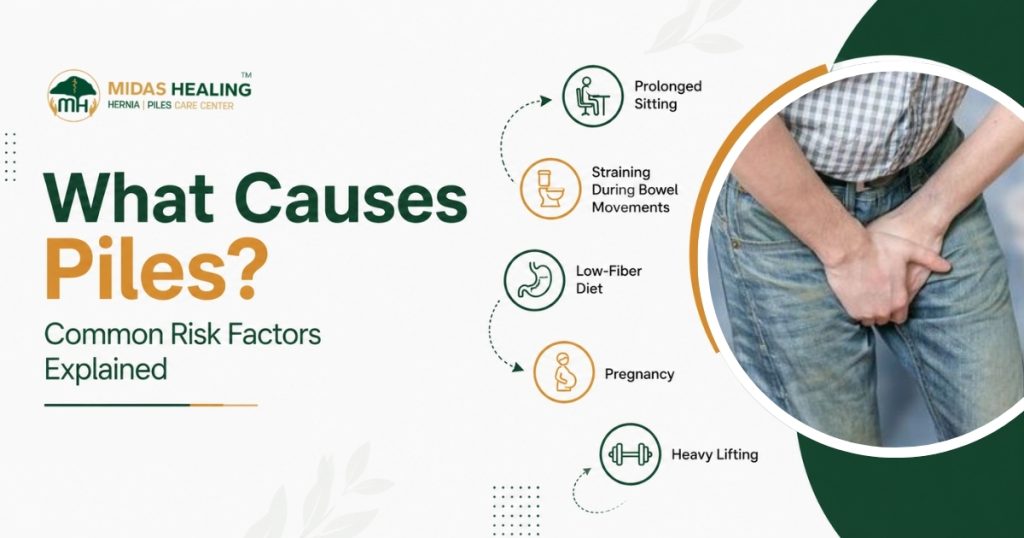
So, what actually causes piles? There isn’t always one clear reason. Constipation, repeated straining, prolonged sitting, pregnancy, ageing, and certain lifestyle habits can all increase pressure on the veins around the anus and lower rectum. Understanding the common causes of piles makes it easier to recognise your own risk factors and make sensible changes.
Causes of Piles: How Do They Develop?
Piles, also known as haemorrhoids, are swollen veins in and around the lower rectum and anus. They can develop when these blood vessels come under increased pressure.Think about what happens when you’re constipated. A hard stool is difficult to pass, so you may push harder than usual. If this happens repeatedly, the extra pressure can contribute to swollen haemorrhoidal tissue.
Spending a long time on the toilet can also add pressure to the area. Small everyday habits can therefore play a bigger role than you might expect.
Piles Causes Linked to Constipation and Straining
Constipation is one of the most common causes of piles.When bowel movements are infrequent, or stools are hard, passing them can become uncomfortable. The natural reaction is often to strain. Doing this repeatedly puts additional pressure on the blood vessels around the rectum.
A diet low in fibre, not drinking enough fluids, and being physically inactive can contribute to constipation. Ignoring the urge to use the toilet may also make bowel habits less regular.
Simple changes can help. More fibre, adequate fluids, regular movement, and avoiding unnecessary straining can all support healthier bowel habits.
Can Sitting for Too Long Increase Your Risk?
Modern life involves plenty of sitting.You might spend hours at a desk, sit through a long commute, and then relax on the sofa in the evening. Sitting itself doesn’t automatically cause piles, but prolonged sitting can contribute to pressure around the rectal area, particularly when combined with constipation or inactivity.
Even toilet habits matter. Sitting there for longer than necessary, especially while scrolling through your phone, isn’t doing your body any favours.Keeping toilet visits brief and getting up regularly during the day are simple habits worth adopting.
Pregnancy and Age Can Be Risk Factors
Not every risk factor is related to lifestyle.Pregnancy can make haemorrhoids more likely because hormonal changes and the growing uterus can increase pressure on the veins in the pelvic region. Straining during childbirth can also contribute.
Age is another factor. As we get older, the tissues that support the veins around the rectum can gradually become weaker. This can make them more vulnerable to swelling.These changes aren’t necessarily something you can prevent, but knowing about them can help you recognise symptoms sooner.
Other Haemorrhoid Causes and Risk Factors
There are several other haemorrhoid causes and contributing factors to keep in mind.Being overweight may increase pressure in the pelvic area. Repeated heavy lifting or activities involving significant straining can also contribute in some people. Chronic diarrhoea can irritate the area, while ongoing constipation creates repeated pressure.
Family history may matter too. Some people appear to be more prone to developing haemorrhoids because of inherited differences in the strength of the supporting tissues.
Having one or more risk factors for piles doesn’t mean you’ll definitely develop them. It simply means paying closer attention to your bowel habits and symptoms is sensible.
When Should You Speak to a Doctor?
It’s easy to assume that bleeding or discomfort around the anus is simply piles. But rectal bleeding can have several causes, so it shouldn’t automatically be dismissed.Persistent bleeding, severe pain, recurring symptoms, or a noticeable lump deserves proper medical assessment. Getting an accurate diagnosis is important before deciding on any treatment.
MIDAS Healing specialises in proctology and provides focused care for piles, fissures, fistulas, pilonidal sinus, and related conditions. The centre offers modern minimally invasive approaches and provides care from consultation through follow-up.
Conclusion
Understanding the causes of piles can help you spot habits and circumstances that may increase your risk. Constipation, repeated straining, prolonged sitting, pregnancy, ageing, and certain lifestyle factors can all contribute. Eating enough fibre, drinking sufficient water, staying active, and avoiding unnecessary straining can support healthier bowel habits. If symptoms continue or you notice bleeding, don’t simply assume it’s piles. Speak to a qualified medical professional for proper assessment and advice. With its focus on specialised piles and proctology care, MIDAS Healing, guided by Dr Chetan Mhas, aims to provide patients with clear advice, appropriate treatment, and supportive care throughout their recovery.
📋 In This Article
- Causes of Piles: How Do They Develop?
- Piles Causes Linked to Constipation and Straining
- Can Sitting for Too Long Increase Your Risk?
- Pregnancy and Age Can Be Risk Factors
- Other Haemorrhoid Causes and Risk Factors
- When Should You Speak to a Doctor?
- Conclusion
Get Your FREE Expert Consultation
Error: Contact form not found.
Get Your FREE Expert Consultation
Phone
+91 7070700684
+91 7070700683
midashealing1@gmail.com
Frequently Asked Questions
1. What are the most common causes of piles?
The common causes of piles include constipation, hard stools, repeated straining during bowel movements, prolonged sitting, pregnancy, and age-related weakening of supporting tissues. Some people may also have a family tendency towards haemorrhoids. Having one risk factor doesn’t mean piles are inevitable, but recognising these factors can help you take preventive steps.
2. Can constipation really lead to piles?
Yes, constipation is one of the most recognised causes of piles. Hard stools can make bowel movements difficult, which often leads to repeated pushing or straining. Over time, this extra pressure may contribute to swollen haemorrhoidal veins. Improving fibre intake, drinking enough fluids, and avoiding unnecessary straining may help support regular bowel movements.
3. What are the main risk factors for piles?
Several risk factors for piles can increase the likelihood of developing haemorrhoids. These include chronic constipation or diarrhoea, spending too long on the toilet, prolonged sitting, pregnancy, being overweight, ageing, and repeated heavy lifting. These factors don’t guarantee that someone will develop piles, but managing avoidable risks can be helpful.
4. Can lifestyle changes reduce the risk of haemorrhoids?
Yes, everyday habits can make a difference. Eating fibre-rich foods, drinking enough water, exercising regularly, responding to the urge to pass stool, and avoiding prolonged sitting on the toilet can support healthy bowel movements. These steps may be particularly useful for people who already have several risk factors for piles.
5. When should I see a doctor about possible piles?
You should seek medical advice if you have persistent rectal bleeding, significant pain, recurring swelling, a lump, or symptoms that don’t settle. Although haemorrhoids are common, similar symptoms can occur with other conditions. A proper examination helps identify the actual cause and ensures you receive appropriate treatment rather than simply guessing.